




This Wuthering Waves beginner guide is written for version 3.8, released on November 12, 2026, and covers the things a new Rover should get right early: how team combat works, how Echoes work, what to do with Waveplates, and how to spend Astrite without regret. The game is far friendlier to new players than it was at launch, and 3.8 added tools that remove some of the old busywork. The systems are still dense, so here’s the short version of each.
Wuthering Waves is free on Windows PC. Play Wuthering Waves free on PC.
Key Takeaways
- Push the main story to raise Union Level, which unlocks systems and higher caps
- Build one team of three: a main DPS, a sub-DPS and a support
- Swap characters when Concerto Energy is full to trigger Outro and Intro Skills
- Equip Echoes early, but don’t farm perfect ones until late
- Spend Waveplates every day on your main team’s materials
- A 5-star is guaranteed within 80 pulls, and on the featured weapon banner it’s always the featured weapon
First Steps on Solaris-3
You play Rover, and Rover is a real team member, not a placeholder. The character is free, gains new attributes through the story, and current tier lists still rank the Electro and Havoc versions as useful. Version 3.8 even reworked Rover’s Resonance Conversion page so each attribute keeps its own Echo set.




Your account level is called Union Level. Story quests, exploration and daily activity raise it, and it gates character level caps, harder material stages and better Echo drops. The efficient path is to follow the main story until it stops you, then explore the area you’re in. Exploration is quick: sprinting outside combat costs no stamina, and you can run up walls.
Check the PC requirements before you commit. Steam lists 150 GB of storage and 16 GB of RAM as the minimum. The 3.8 launcher is testing a Basic Resources option and a cleanup tool to reduce that footprint.
Combat Basics: Dodge, Counter, Swap
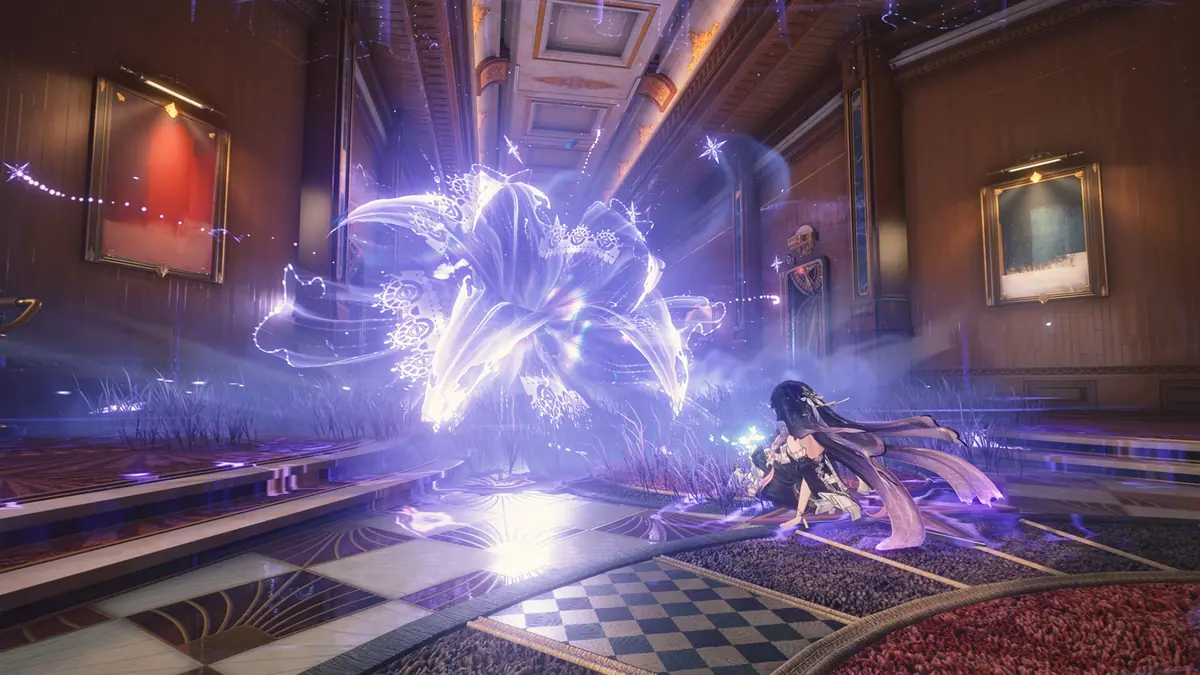
You control one Resonator at a time from a team of three. Four ideas carry most fights:
- Extreme Evasion. Dodge just before an attack lands. You take no damage and can follow with a Dodge Counter.
- Forte. Each Resonator has a unique gauge that powers their signature move. Read the Forte description for every character you use. It’s the part of the kit that makes them work.
- Concerto Energy. This fills as you attack. When it’s full, swapping fires the leaving character’s Outro Skill, usually a buff, and the arriving character’s Intro Skill, usually a hit.
- Echo Skill. Your main Echo gives an extra attack or transformation on its own cooldown.
The rotation that results is simple to describe: build Concerto on your support, swap to pass the buff, build on your sub-DPS, swap again, then spend everything on your main DPS. Learn that loop and the damage difference is large.
Building Your First Team
Teams have three jobs. The main DPS holds the field and deals most of the damage. The sub-DPS contributes quick damage and an Outro buff. The support heals, shields or buffs. Resonators belong to one of six attributes: Glacio, Fusion, Electro, Aero, Spectro and Havoc. Many Outro Skills boost a specific attribute or damage type, so match your sub-DPS and support to what your main DPS deals.
For free options, Game8’s 3.8 list rates Rover (Electro) and Sanhua among the stronger sub-DPS picks, and Verina and Baizhi as usable supports that don’t need a limited banner. That’s enough to carry the story while you save for a limited main DPS.


Put your resources into three characters. Levelling a wide roster early is the most common way new accounts stall.
Echoes and Gear

Echoes are this game’s equipment. Enemies can drop them when defeated, and each Resonator equips five. Every Echo has a cost, the total is capped, and Echoes from the same Sonata set give bonuses when you equip enough of them. The Echo in the first slot also provides your Echo Skill.
The beginner rule is restraint. Early Echoes are low rarity and will be replaced, so equip whatever matches your character’s attribute and move on. Raise your Data Bank level by collecting different Echoes, because that improves the rarity of future drops. Serious farming for main stats and substats belongs to the endgame.
Weapons matter as much. Each Resonator uses one weapon type, and a levelled 4-star weapon of the right type beats an unlevelled 5-star.
Waveplates, Astrite and Convene
Waveplates are stamina. They refill on their own over time and pay for material stages, boss rewards and Echo challenges, so empty them daily. Version 3.8 makes this easier: the new Material Locator button in the Guidebook and the Resonator Ascension Planner teleports you to the stage that drops what you need, and Blitz Mode lets you repeat a challenge without reloading.
Astrite is the premium currency you earn from quests, events and exploration. It buys pulls on Convene banners. The rules worth knowing:
- A 5-star is guaranteed within 80 pulls
- On a featured Resonator banner, your first 5-star has a 50% chance to be the featured character, and the next one is guaranteed if you miss
- On the featured weapon banner, the 5-star is always the featured weapon
Phase 1 of 3.8 runs until December 3 with Lily, Sigrika and Qiuyuan. I’d save for a main DPS you like before pulling a support or a weapon, and check a tier list first.
FAQ
Is Rover good in Wuthering Waves?
Yes. Rover is free, switches attributes, and the Electro version is rated as a strong sub-DPS on current lists.
How does pity work?
A 5-star is guaranteed within 80 pulls. Featured Resonator banners have a 50/50, and on featured weapon banners the 5-star is always the featured weapon.
What should I spend Waveplates on?
Level, skill and weapon materials for your three main Resonators. Leave heavy Echo farming for later.
How many Resonators are in a team?
Three, with one on the field at a time.
For a wider view, read my Wuthering Waves review, and pick your pulls with the Wuthering Waves tier list. More games like it are in Gacha RPG, and official news is on the official Wuthering Waves website.


